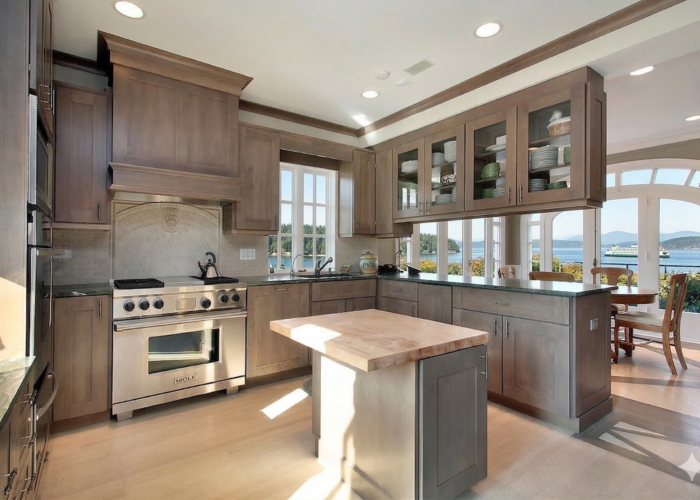
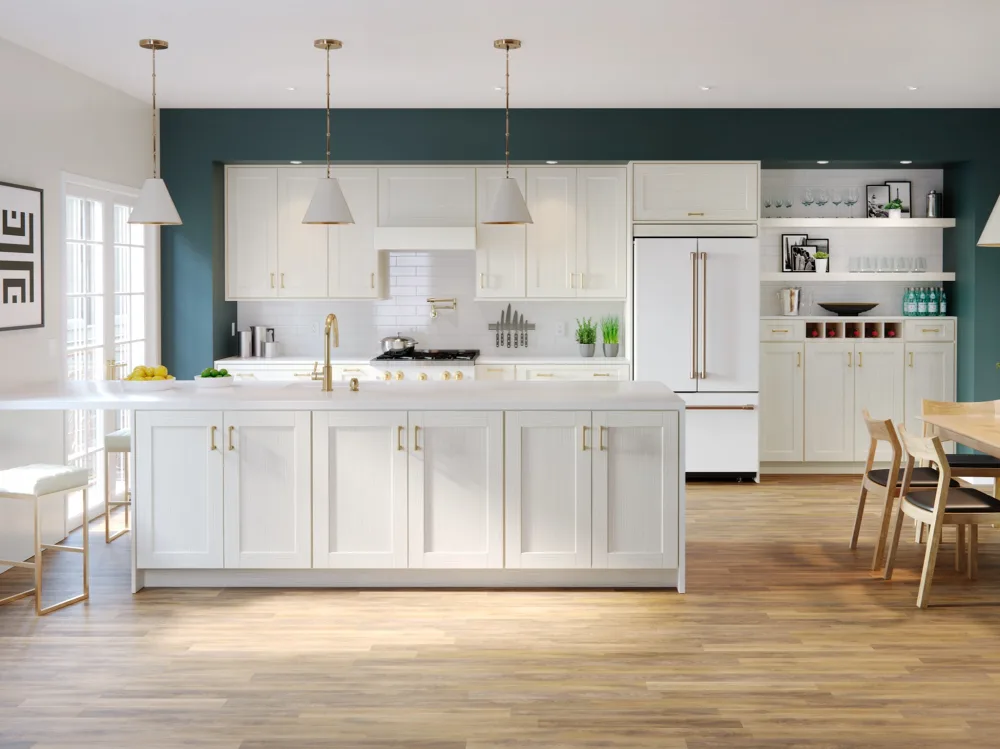
It’s one of the first questions homeowners ask, and one of the hardest to answer honestly: How much does a kitchen remodel cost?
You’ll often see articles or contractors throw out a number or a neat price range, but the reality is far more complicated. A kitchen remodel is not a standardized purchase like buying a car or another fixed consumer product. It’s a custom project shaped by your home, your priorities, your lifestyle, and your long-term expectations.
That’s exactly why I’m cautious about giving quick answers or simple numbers. A kitchen remodel is made up of dozens of decisions, and each one can significantly affect the final cost. To understand pricing, it’s far more helpful to understand why the cost varies so widely in the first place.
Below, we’ll walk through the major variables that influence kitchen remodel costs and why comparing one project to another rarely tells the full story.
Why There’s No “Average” Kitchen Remodel
Two kitchens can be the same size and still end up with vastly different price tags. That’s because cost is not driven by square footage alone. It’s driven by choices, complexity, and expectations. Common cost guides also note that size matters, but material quality, labor, and layout changes are major pricing factors as well.
Every kitchen remodel sits at the intersection of:
- Design quality
- Material selection
- Craftsmanship
- Existing conditions
- Scope of change
Change any one of those, and the cost can shift dramatically.
Cabinets: The Largest Cost Variable
Cabinetry is often the single biggest investment in a kitchen remodel, and for good reason. Cabinets define how your kitchen functions, how it looks, and how well it holds up over time.
Cabinet Quality
Cabinets range from basic, mass-produced boxes to fully custom-built systems. Differences often include:
- Construction methods
- Thickness of materials
- Drawer box quality
- Joinery techniques
- Longevity and durability
Higher-quality cabinets cost more upfront, but they also tend to last much longer.
Cabinet Finish
Painted cabinets, stained cabinets, specialty finishes, and custom colors all carry different costs. A simple stained and clear-coated finish is usually far less labor-intensive than a painted, antiqued, or glazed finish.
Cabinet Accessibility and Features
Details add up quickly:
- Soft-close drawers and doors
- Full-extension drawer slides
- Pull-out organizers
- Trash and recycling drawers
- Hidden storage solutions
Each upgrade improves usability, but each one also increases cost.
Number of Cabinets, Drawers, and Doors
A kitchen with more drawers and doors costs more to build than one with fewer components. Drawer-heavy designs, while highly functional, usually require more materials and labor than door-only layouts.
Countertops, Backsplash, and Flooring
Countertops are another major variable when it comes to price. Published kitchen cost guides consistently show that materials, layout complexity, and finish details all affect total cost.
Countertops
Countertop pricing depends on several factors working together:
- Material type, such as laminate, solid surface, quartz, granite, marble, or porcelain
- Size and layout, including islands, waterfall edges, overhangs, and seam placement
- Edge profile and finish, such as eased, decorative, polished, honed, or textured
Each material comes with its own base cost, maintenance requirements, and fabrication demands.
Backsplash
Backsplashes are a perfect example of how design complexity affects cost.
- Basic subway tile is relatively affordable.
- Handcrafted tile, specialty shapes, or imported materials can be significantly more expensive.
- Straight-set tile is more efficient to install.
- Herringbone, chevron, mosaic patterns, or full-height applications usually require more labor.
In many cases, labor costs can exceed material costs for ornate backsplash designs.
Flooring
Flooring prices vary widely depending on both what’s being installed and what’s already there.
- Material options may include luxury vinyl plank, tile, engineered hardwood, or solid hardwood.
- Demolition, subfloor leveling, and repair work can add substantial cost before installation begins.
- Straight-lay flooring is typically less expensive than diagonal, herringbone, or other custom patterns.
The more intricate the layout, the more labor is required.
Appliances, Plumbing, and Electrical
Appliances alone can swing a kitchen remodel budget dramatically. Some general remodeling guides note that even nationally averaged remodels can span from around $15,000 into six figures depending on choices and scope.
Appliances
You might spend:
- Around $1,000 on a basic refrigerator
- More than $20,000 on a high-end built-in or professional-grade unit
Multiply that difference across ranges, cooktops, ovens, and dishwashers, and appliance choices can easily create a five-figure swing in cost.
Plumbing
Sinks and faucets also come in a wide range of prices and quality levels.
- Budget fixtures may cost less upfront.
- Higher-end fixtures often offer better materials, performance, and longevity.
Plumbing costs also rise when:
- Fixtures are relocated
- New supply or drain lines are run
- Older plumbing systems need to be updated
Electrical
Electrical upgrades are often overlooked early in planning, but they matter.
Common additions include:
- Under-cabinet lighting
- Accent or interior cabinet lighting
- Automatic trash drawer systems
- New outlets or switch locations
- Updated light fixtures
Leaving the existing electrical layout in place is usually less expensive than reworking it, but it may also limit functionality.
Layout Changes and Budget Reality
One of the most expensive decisions in a kitchen remodel is changing the layout. Remodeling cost references consistently identify layout changes, moving plumbing, and electrical rework as major drivers of higher project costs.
Even without moving walls, relocating major elements can become expensive:
- Moving a sink requires plumbing changes
- Relocating appliances affects electrical and sometimes venting
- Reconfiguring islands can affect flooring, lighting, and cabinetry
A full kitchen reconfiguration multiplies trades, labor, and coordination, and that is where costs can rise quickly.
So what does a kitchen remodel cost? You’ll often hear very broad ranges, and that’s because broad ranges are often the most honest answer. Recent published guides place many full kitchen remodels somewhere between roughly $15,000 and $100,000+, while national averages for standard remodels often cluster around the mid-$20,000s to mid-$30,000s, depending on what is included.
Instead of asking for a single number, a more useful question is: “Can my needs, design goals, and budget realistically align in my kitchen remodel?” That question gets closer to the real issue. Most homeowners are not looking for the cheapest possible kitchen, and they are not trying to chase an unrealistic dream. They want to know whether the kitchen they envision can be achieved within the financial boundaries they are comfortable with.
Sometimes the answer is yes, and sometimes it is no. Not every kitchen remodel is feasible within every budget, especially when structural changes, major layout reconfigurations, or premium materials are involved. A good remodeler’s responsibility is not to push a project forward at all costs. It is to help homeowners understand what is realistic, where their money will have the greatest impact, and whether moving forward makes sense right now.
When a remodel is possible within a given budget, the goal becomes maximizing value, not cutting corners. That means helping homeowners put their investment where it matters most to them. For some, that may be an eye-catching backsplash. For others, it may be better cabinet functionality, improved storage, or durable countertops with strong visual impact.
This is why working with a remodeler who truly tailors the project to your needs is so important. When design decisions are guided by your priorities rather than assumptions or templates, you avoid overspending on features you do not value and underinvesting in the ones that matter most.
At the end of the day, a successful kitchen remodel is not about hitting a number. It is about achieving the best possible outcome for your home, your goals, and your budget.
Pricing ranges
Here’s a cleaned-up version of your pricing section. These ranges are reasonable as broad planning estimates, though published national sources tend to place DIY remodels lower on average and contractor-led projects across a very wide spread depending on scope and finish level. HomeAdvisor says DIY kitchen remodels average about $20,000, with most homeowners spending $9,000 to $30,000, while contractor-led remodels often fall between about $14,586 and $41,540 on the low-to-average national end, with full high-end remodels reaching $65,000 to $130,000+ or more.
DIY full kitchen remodel
- Low-end finishes: $12,000 to $20,000
- Mid-grade finishes: $20,000 to $50,000
- High-end finishes: $40,000 to $100,000
Hiring a contractor for a full kitchen remodel
- Low-end finishes with subpar installation: $25,000 to $60,000
- Mid-grade finishes with quality installation: $55,000 to $120,000
- High-end finishes with high-quality installation: $80,000 to $200,000
Obviously, many factors affect actual cost, so these are intentionally broad ranges. Size of the kitchen is a major variable, but it is not the only one; scope, materials, labor, and layout changes all play a major role.
Never Forget:
No matter who you work with, make sure your remodel is:
- Thoughtfully designed
- Built with quality craftsmanship
- Aligned with your long-term satisfaction, not just short-term cost
The “best” kitchen is not necessarily the most expensive one. It is the one that fits your home, your life, and your expectations for years to come.
A well-planned kitchen remodel is not about chasing a number. It is about creating a space that truly works for you.
Would you like me to turn this into a more polished website article in your Honest Cabinets voice, with stronger flow and less repetition?